

A lot of natural texture conversations start with a confession: “I think my hair might be wavy, but I have been blow-drying it straight for so long that I do not really know.” That is normal. Most people are not born knowing how to read their curl pattern, and many Denver clients have spent years treating texture like a problem to smooth out instead of a pattern to understand.
At Fluff, we look at natural hair texture as part of the whole colour and styling plan. Waves, curls, and coils behave differently in Denver’s dry air. They also react differently to lightener, gloss, heat, product weight, hard water, and haircuts. The goal is not to force your hair into a category. The goal is to understand what your hair is trying to do, then make the cut, colour, and routine work with it.
Quick read
Your curl pattern is useful. Your porosity is often the missing piece.
Pattern
Pattern is the visible shape: straight, wavy, curly, or coily. It tells us how the hair wants to dry, shrink, frizz, and move.
Porosity
Porosity is how your hair absorbs and releases moisture. It explains why one curl loves cream while another collapses under the same product.
Climate
Denver changes the routine. Low humidity, hard water, winter heat, and sun exposure can make texture feel drier and less predictable.
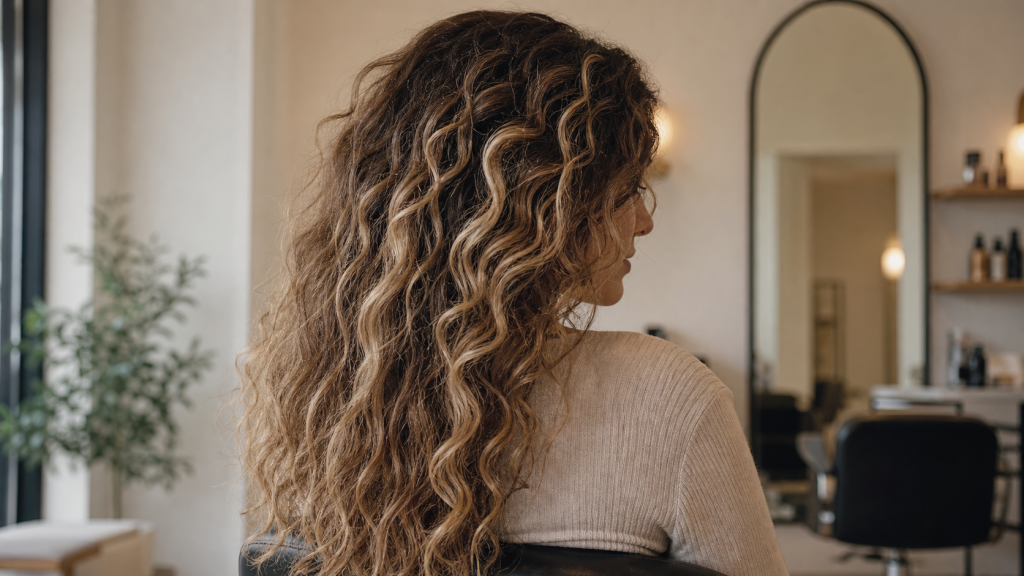
How to identify your natural texture
The easiest test is boring, which is why it works. Wash your hair, condition it, apply a light leave-in or curl-friendly styling product, then let it air-dry without brushing, heat styling, or repeatedly touching it. Look at what forms when the hair is left alone.
Type 1 hair dries mostly straight. Type 2 hair forms an S wave. Type 3 hair forms ringlets or spirals. Type 4 hair forms tight coils, often with more shrinkage and less visible curl separation unless it is styled intentionally. Many people sit between types. That is not a problem. Mixed pattern is normal, especially after years of colour, heat, ponytails, extensions, or straightening.
We use the curl-type language because it gives us shared vocabulary, but we do not worship the chart. A 2C wave with high porosity may need more care than a 3A curl with strong elasticity. A fine curl may need less product than a thick wave. The category is the beginning of the conversation, not the answer.
01
If your hair waves but goes limp
You may have fine wavy hair, product buildup, or low porosity. Heavy creams can make this texture look greasy before it looks hydrated. Start lighter than you think: leave-in spray, mousse, or a soft gel applied on wet hair.
02
If your curls frizz before they form
Your hair may be thirsty, porous, brushed too late in the process, or missing hold. In Denver, curly hair often needs product applied wetter than clients expect, then left alone while it sets.
03
If coils feel dry no matter what
Moisture and sealing may need to be separated. Coily hair can benefit from layered hydration, careful detangling, protective styling choices, and a cut that respects shrinkage instead of fighting it.
Porosity changes the whole routine
Porosity is the part people skip, and it is usually why their products disappoint them. Low-porosity hair has a tighter cuticle, so product can sit on top. It usually likes lighter layers, warm water, and patience. High-porosity hair absorbs quickly but loses moisture quickly too. It often needs richer conditioning, gentler colour work, and more protection from heat and friction.
Colour history matters here. Lightening can increase porosity, especially through the ends and face frame. If your curls looked different before years of blonding or hot tools, we may need to build a plan around both the texture you have now and the healthier pattern we are trying to grow back in.
The habits that flatten natural texture
Dry brushing is the big one. It breaks curl clumps apart and turns a pattern into a cloud. Rough towel drying does the same thing at the cuticle. Daily high heat can weaken curl memory over time, and heavy products can stretch fine waves until they look like they disappeared.
That does not mean you have to become a completely different person overnight. Most clients do better with a realistic reset: detangle in the shower with conditioner, squeeze water out with a soft towel or cotton tee, apply product while the hair is still wet, diffuse gently or air-dry, and avoid touching the hair until it is dry. Start there before buying an entire shelf of curl products.
A simple Denver texture reset
Wash day
Cleanse gently, condition well, detangle wet, and style while the hair still has enough water in it to form clumps.
Drying
Use a diffuser on low or air-dry when possible. Keep your hands out of the hair until it is fully dry, then soften the cast if needed.
Between washes
Refresh with mist, leave-in, or a little water and gel. Do not fully rework the hair every morning unless your texture asks for it.
Colouring curls, waves, and coils
Texture changes how we approach colour. Curly and coily hair can be more fragile through the bends of the strand, and previously lightened texture may process faster through porous ends. A careful colourist adjusts placement, saturation, developer, timing, and gloss work around the hair in front of them.
Balayage can be beautiful on texture because the colour can follow movement instead of slicing through it. Gloss can add shine without asking the hair to lift again. Sometimes the most luxurious colour decision is restraint: protect the pattern first, then build brightness gradually.
Want help reading your natural texture?
Come in with your hair as close to its natural state as you can. We will look at pattern, density, porosity, colour history, and styling habits, then build a cut, colour, or care plan that fits real life in Denver.
Natural hair texture: common questions
How long does it take to see my natural curl pattern?
If the hair is not heat damaged, you may see more pattern within a few wash days. If the hair has years of heat or chemical damage, the healthier pattern may need to grow in over months while damaged ends are gradually cut away.
Should curly hair always be cut dry?
Often, yes. Dry cutting lets the stylist see shrinkage, shape, density, and how curls sit in real life. Some stylists use a mix of dry and wet cutting depending on the goal, but texture should not be treated like straight hair with a surprise curl pattern at the end.
Can I colour curly hair without ruining it?
Yes, with the right plan. The colour may need to be slower, softer, glossier, or more strategic than a straight-hair formula. Protecting the pattern matters as much as the shade.
Why does my texture feel different in Denver?
Low humidity, hard water, sun exposure, and indoor heat can all make textured hair feel drier. That does not mean your curl pattern is gone. It usually means the routine needs more moisture balance, gentler drying, and better buildup control.