
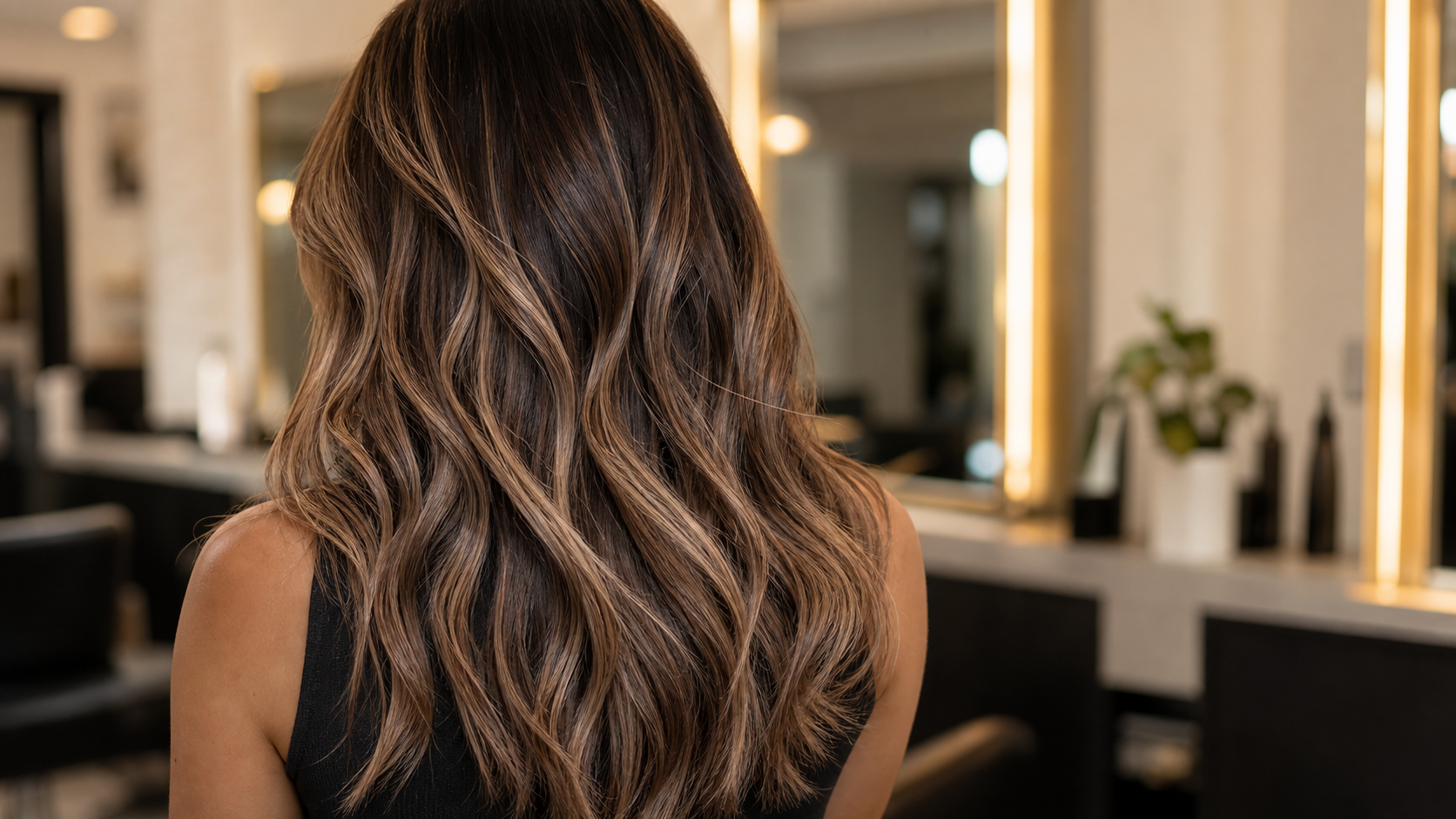
Dimensional hair colour is a broad phrase, but in the chair it means something specific: the finished hair has more than one shade, placed with enough intention that the colour reads as depth instead of stripes.

It is the reason some hair looks expensive in photos and some hair looks flat even when the colour itself is technically fresh. Dimension gives the eye somewhere to go.
The Short Version
Natural hair is rarely one solid colour. It has depth at the root, brightness where the light hits, and softer pieces through the ends. Dimensional colour recreates that movement on purpose.
That can mean highlights, balayage, lowlights, root shadowing, glossing, grey blending, or a combination of several services. The method matters less than the placement.
Why Flat Colour Can Feel Heavy
Flat colour happens when every strand is pushed into the same tone. On some short cuts and very dark brunettes that can be beautiful. On many clients, especially longer hair, it removes shape.
Without depth, curls and waves look less defined, brunettes can look dense, blondes can look hollow, and the haircut itself can disappear. Dimension puts shape back into the hair.
How We Build Dimension
At Fluff, dimensional colour usually starts with a map. Where should the eye see brightness? Where does the haircut need shadow? Which pieces around the face should be lifted, and which pieces should stay anchored?
From there, the technique changes by client. One person may need foils for control. Another may need balayage for softness. Another may need lowlights because too much old blonde has made the hair look thin.
What creates believable dimension
Depth
The darker pieces are not mistakes. They make the lighter pieces visible.
Placement
Brightness should follow the haircut, face shape, and natural fall of the hair.
Tone
Warmth, beige, ash, copper, and neutral tones all behave differently in Denver light.
Gloss
A good gloss ties the shades together so the colour looks polished rather than busy.
Why It Works So Well in Denver
Denver light is bright. Hair that looks soft indoors can look much warmer and flatter outside. Dimensional colour gives the result more range, which helps it survive different lighting, hard water, and dry-air dullness.
It also gives us more options for maintenance. Instead of refreshing everything every visit, we can gloss, shift tone, add a few lowlights, or brighten the face frame while leaving the rest alone.
Who Should Ask for Dimensional Colour
Ask for dimensional colour if your hair photographs flat, your blonde feels too solid, your brunette feels heavy, or your colour grows out in a way that feels harsh.
It is also the right language if you do not want a dramatic transformation but you do want your hair to look more expensive, healthier, and more intentional.
Quick questions
What clients ask before booking
Straight answers from the chair at Fluff Colour Salon in LoDo Denver.
What is dimensional hair colour?
Dimensional hair colour uses multiple tones, such as highlights, lowlights, glosses, or root shading, to create depth and movement instead of one flat shade.
Is dimensional colour the same as balayage?
No. Balayage can create dimensional colour, but dimensional colour can also be built with foils, lowlights, glossing, root shadows, or grey blending.
Does dimensional colour work for brunettes?
Yes. Brunettes often benefit from subtle dimension because it adds movement, shine, and softness without turning the overall result blonde.
How often does dimensional colour need maintenance?
Most clients refresh tone every 8 to 12 weeks and adjust brightness or lowlights every few months, depending on contrast and grow-out.